Bridges are designed to fill gaps left when one or more teeth are missing. They are a fixed appliance, meaning only your dentist can remove them. Bridges come in several types and traditionally utilise your existing teeth as support for ‘bridging’ your gaps. In these cases, the supporting adjacent teeth are prepared to become part of the bridge, and, once cemented in place, provide a seamless continuity of appearance and function.
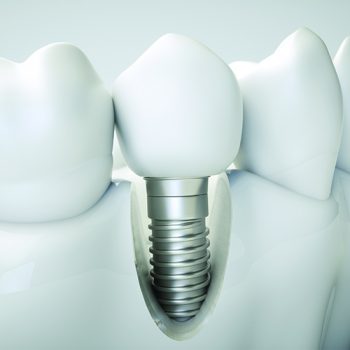
Recent advancements in dental technology have expanded bridge restorative treatment options to include bridges that are supported by dental implants. These implant-supported bridges offer the distinct advantage of being able to restore gaps created by three or more missing teeth.
Bridges
Sometimes teeth are lost. The adjacent teeth are prepared. A Bridge is made which exactly matches the space and is fitted across the gap.
Adhesive Bridge (Metal 2-Wing)
An adhesive bridge is non destructive. The Bridge is prepared and stuck to the inside of the adjacent teeth.
Bridges are a vital restorative treatment option which have returned full functionality and a natural, beautiful smile to countless patients who have suffered the loss of multiple teeth.
The process for restoring a gap with a bridge is very similar to that of a crown. As usual, your dentist will discuss each step with you prior to starting treatment.
Conventional Bridges
This bridge utilises the teeth either side (not necessarily both) of the gap, as support. The teeth are prepared as for crowns to allow creation of a unified bridge and then cemented as a single, fixed appliance. Conventional bridges may be made of tooth or non-tooth coloured materials. A portion of your bridge treatment will involve similar treatment steps when making and placing crowns.
Resin-bonded Bridges
This bridge requires little tooth preparation prior to placement; possibly eliminating need for a local anaesthetic. It relies on an adhesive “wing” attaching to an adjacent tooth. These bridges are used most often to replace one front tooth.
Adhesive Bridge (Fibre 1-Wing)
An adhesive bridge is non destructive. A bridge is prepared and ‘stuck’ to the inside of the adjacent tooth.
Implant-retained Bridges
This bridge utilises dental implants and achieves the closest-to-natural restorative results possible, offering exceptional strength and aesthetics.
A bridge can allow you to once again enjoy the foods you love, to speak clearly, and to smile with confidence. Visit our homepage to know more about other treatments.